The single most useful habit in Latin American home cooking is to stop judging doneness by look, smell, or the clock and start measuring it. Every risk that matters here — undercooked pork in a tamal, a fish ceviche built on unfrozen catch, a pot of beans left cooling on the stove overnight — resolves to a number you can check: an internal temperature, a freezer setting held for a set number of hours, a pot cooled fast and refrigerated rather than parked in the warm zone. The techniques in this cooking are not especially dangerous. The handling around them is where people get into trouble, because so much of the tradition is built on long, slow, communal, room-temperature work.
Tamales: the temperature that matters is inside the filling, not the steam
A tamal is safe when the filling hits its target internal temperature, and the target depends entirely on what the filling is. Meat or poultry of any kind in a tamal needs 165 °F (73.9 °C) at the center. That is the number for the finished dish, and it overrides the lower targets that apply to the raw ingredients on their own: whole cuts of meat are safe at 145 °F (62.8 °C), ground meat at 160 °F (71.1 °C), and poultry — whole or ground — at 165 °F (73.9 °C). Cook the filling to the higher tamal target and you don't have to think about which category you're in.
The reason this trips people up is structural. A tamal is masa spread on a corn husk or banana leaf, filled, wrapped, and steamed until the masa is firm — and firm masa is a terrible doneness signal for the meat inside. Masa sets at a temperature well below what a pork shoulder needs, so a tamal can feel done, slice cleanly, and still be raw at the core. The husk insulates, the filling is dense, and a steamer full of tightly packed tamales heats unevenly. The only reliable read is a probe thermometer pushed into the center of the filling of the tamal in the coldest part of the pot — the middle of the stack, not the one nearest the steam vent.
Practical consequences: use an instant-read thermometer, and check more than one tamal, because a big pot will not be uniform. If you're making a batch with different fillings — cheese and rajas alongside pork — check the meat ones individually; the cheese ones give you no safety signal at all from temperature alone, so they ride on the timing of the meat tamales or on the masa being fully set and steaming hot throughout. And if you're reheating leftovers, you're back to 165 °F, not "hot enough to eat."
The cost of this approach is time and a little fuss: probing means unwrapping a tamal mid-steam, which lets steam out and slows the pot. Do it near the end of your expected cook time, rewrap tightly, and accept that you'll sacrifice one tamal's presentation to know the batch is safe. The alternative — trusting the clock because your grandmother never used a thermometer — works until it doesn't, and the failure mode is a foodborne illness that hits a whole table at once.
Ceviche: freezing is the step that makes raw fish safe, and it has exact parameters
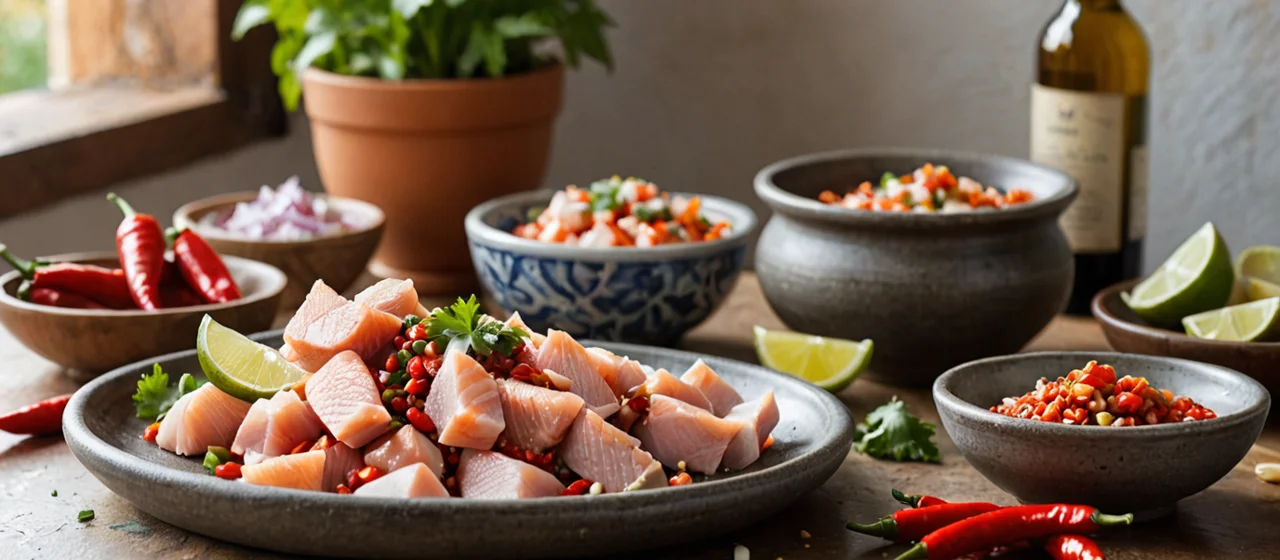
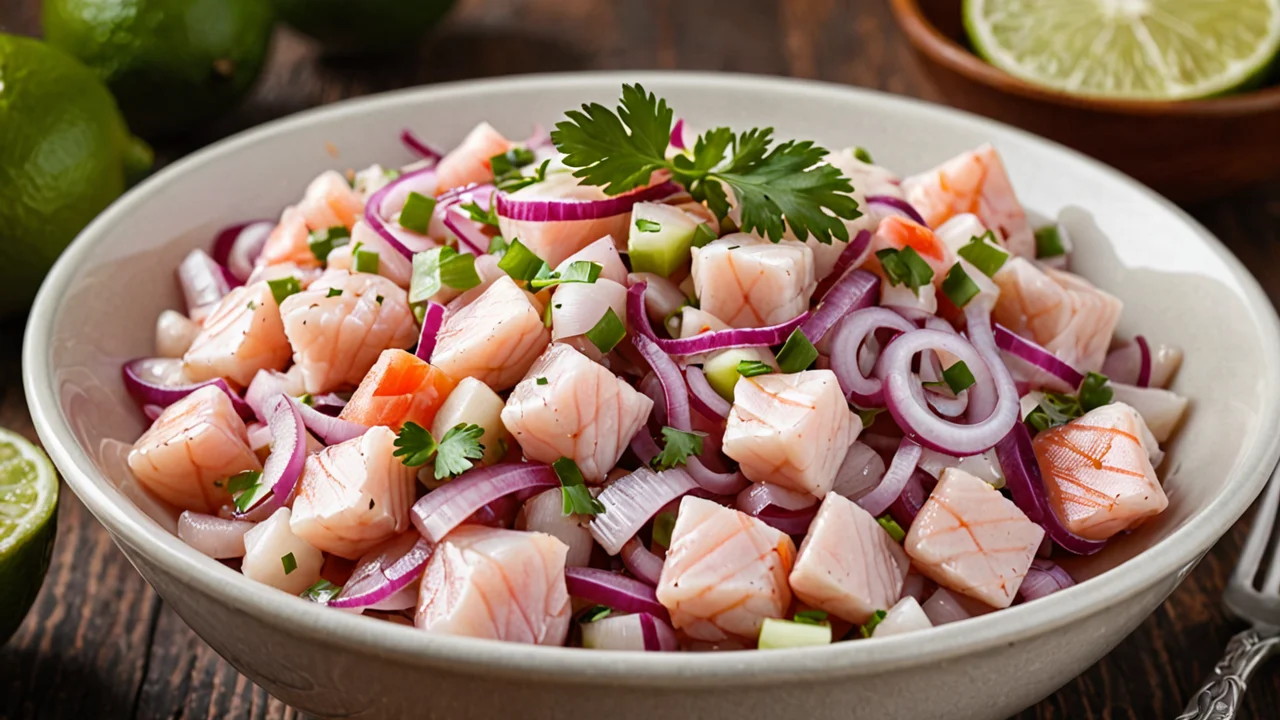
Fresh fish is not automatically safe to eat raw. If you're making ceviche from fish that hasn't been through a parasite-destroying freeze, you're taking a risk that lime juice does not eliminate — acid denatures protein and changes texture, but it does not reliably kill parasites. The freezing protocols are specific, and one of them has to be met in full:
- Freeze at -4 °F (-20 °C) or below for at least 7 days (168 hours).
- Or freeze at -31 °F (-35 °C) until solid, then hold at -31 °F (-35 °C) for at least 15 hours.
- Or freeze at -31 °F (-35 °C) until solid, then hold at -4 °F (-20 °C) for at least 24 hours.
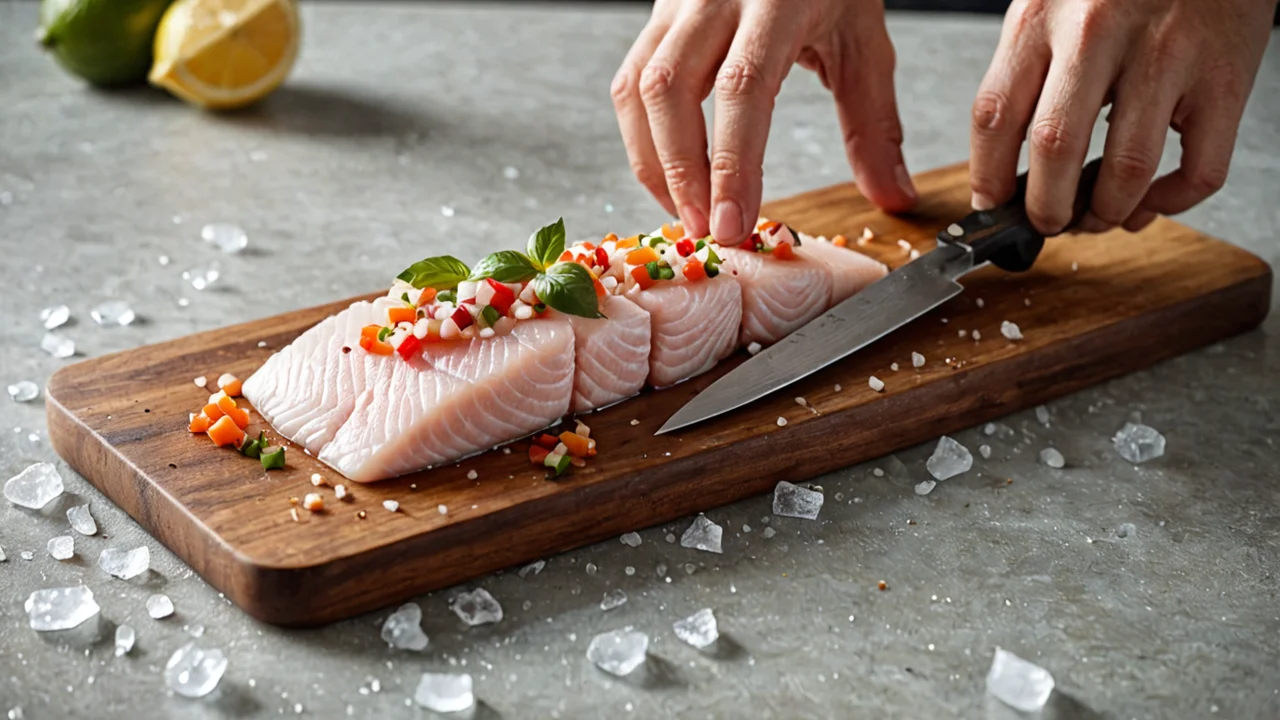
Notice what these demand of your equipment. A standard home freezer runs around 0 °F, which clears the -4 °F threshold — so the 7-day option is the one most home cooks can actually execute. The two faster protocols require a freezer that reaches -31 °F, which is commercial or deep-freeze territory; if your freezer can't hit it, don't pretend it can. The 7-day clock starts when the fish is fully frozen, not when you put it in, and it runs in real hours, so a fish that thaws on the counter mid-week resets your count.
Buy fish with this in mind. Ask the vendor whether it has already been frozen to a parasite-destroying standard — much "fresh" fish sold for sushi has been — and if the answer is vague, freeze it yourself on the 7-day schedule before you build the ceviche. Firm white fish holds up best through the freeze and the acid; delicate fish turns to mush. The trade-off is planning: ceviche becomes a dish you decide to make a week ahead, not an hour ahead, unless you're buying pre-frozen fish you trust. That's the honest cost, and it's small next to the alternative.
Beans, stews, and the cooling step everyone skips
A large pot of beans or stew is one of the more common sources of home food poisoning, and the mechanism has nothing to do with the cooking — it's the cooling. A full stockpot of beans left on the back of the stove to cool slowly sits for hours in the temperature range where bacteria multiply fastest, and the center of a deep pot stays warm long after the outside feels cool. The fix is mechanical: divide the pot into shallow containers so the depth is small, refrigerate promptly rather than overnight on the stove, and leave lids ajar until the steam stops so heat can escape.
Reheating is the other half. Bring leftovers back to a rolling simmer or a measured 165 °F throughout, not just until the edges are hot. Beans and braises reheat unevenly in a microwave, so stir and check, or reheat on the stove where you can see the whole pot come up to temperature. The cost here is refrigerator space and a few more containers to wash — genuinely annoying when you've made a big batch for a crowd, and the reason people cut the corner. Don't cut it on beans and stews; they're the worst candidates for slow cooling because of their volume and density.
Arepas, masa, and the dough-handling questions that actually come up
Arepas and fresh masa are low-risk foods, and the health questions around them are less about pathogens than about handling and storage. An arepa is a thick cornmeal cake, typically made from pre-cooked corn flour, shaped and cooked on a griddle or baked, then split and filled or topped. Masa is ground nixtamalized corn, and masa harina is the dried flour you rehydrate with water or broth to make it. Once hydrated, both are perishable doughs — they contain enough moisture to support growth if left out, and the same prompt-refrigeration rule applies as to any wet dough.
Mix only what you'll shape within a day or so, or refrigerate the rest in a covered container and use it within a few days; discard it when it smells sour or turns tacky. The nixtamalization that makes masa is also why corn dough behaves the way it does — the lime treatment changes the corn's structure and nutrition, and it's the reason fresh masa and masa harina aren't interchangeable with plain cornmeal. If you're using masa harina, rehydrate with hot liquid and let it rest so the flour hydrates fully; under-rested dough cracks and steams unevenly, which matters most when you're wrapping tamales.
For filled arepas, treat the filling like any other cooked food: hot fillings go into hot arepas and get eaten, and cold fillings — cheese, shredded meat — stay refrigerated until you split and stuff. An arepa stuffed with warm filling and then left in a lunch bag for hours is a small, avoidable risk, and the fix is a insulated bag or eating it fresh. There's no dramatic safety story in arepas; the discipline is simply not leaving wet dough and warm fillings sitting around.
Building a kitchen that makes the safe choice the easy one
The reason people skip safety steps isn't ignorance — it's that the safe path is usually the more annoying one. A thermometer within reach, a stack of shallow containers, and a freezer you've actually measured change the default. Buy one instant-read thermometer and keep it where you cook, not in a drawer; check it in ice water occasionally so you trust the reading when it matters. Know your freezer's real temperature with a cheap fridge/freezer thermometer, because the difference between 0 °F and -4 °F decides whether your ceviche plan works at all, and the difference between -4 °F and -31 °F decides whether you can use the fast protocols or must wait the 7 days.
Then think in sequences rather than rules. Raw meat and poultry get handled first, on a clean board, and go into the fridge or the pot before anything ready-to-eat touches that surface. Fish destined for ceviche goes into the freezer the day you buy it, labeled with the date, so the 7-day count is visible. Big pots get divided and chilled before you sit down to eat, not after. Leftovers get reheated to a measured 165 °F. None of this is exotic; it's the same set of moves applied to a different pantry.
The honest trade-off is that a thermometer-and-containers kitchen feels fussier than the way these dishes are often taught — by feel, by memory, by "you'll know." You will mostly know. The point of the numbers is the minority of times you won't: the giant pot of tamales, the deep batch of beans, the ceviche you're serving to guests. Spend the fuss there and relax everywhere else.
Where the traditional method and the safe method pull against each other
Some of the most cherished practices in this cooking are the ones that carry the most risk, and it's worth naming them plainly rather than pretending the tension doesn't exist. Long, slow, uncovered cooling of a big pot is traditional and convenient and genuinely risky. Marinating meat on the counter for hours is common and unnecessary — do it in the refrigerator. Tasting raw masa or filling to check seasoning is fine; tasting raw pork filling to see if it's "done" is how people get sick.
Ceviche is the clearest case. The dish is defined by raw fish, and the tradition assumes fish fresh enough and handled well enough to be safe — an assumption that depends on a supply chain most of us aren't part of. The freezing protocols exist precisely because that assumption doesn't reliably hold. Following them costs you a week of planning and slightly changes the texture of the fish; skipping them costs you a gamble on parasites. Take the week.
Tamales present a quieter version of the same conflict. The craft is in the masa — its texture, its spread, the way it steams — and the meat filling is almost an afterthought in the maker's mind. But the filling is where the risk lives, and the 165 °F target is the one number that makes a batch of tamales safe regardless of what's inside. Learn to probe the center of the filling without apology. A tamal that's been checked is not a lesser tamal; it's the one you can serve to a table full of people without a second thought. That's the whole argument of this approach in one sentence: measure the few things that matter, and the rest of the cooking takes care of itself.
Stuffing an arepa: the filling is the part that needs watching
Cook the filling to its own safe temperature before it ever goes near the arepa, and treat the split arepa as a serving vessel, not a cooking step. A griddled corn cake won't bring a cold shredded-chicken filling up to a safe temperature in the minute or two it spends in the pan, so the meat has to be right before it's stuffed. Reheat leftover fillings until they're steaming throughout, then split and fill.
The failure mode is the lunch bag: an arepa stuffed warm in the morning and eaten at midday has spent hours in the range where bacteria multiply. An insulated bag buys time but doesn't fix a filling that was left out overnight. Fill what you'll eat, keep the rest of the filling cold, and assemble close to the meal.
Masa harina and wet dough: what to refrigerate, and when to throw it out
Rehydrated masa is perishable and belongs in the refrigerator, covered, once you've mixed more than you'll shape. Fresh masa behaves the same way — it holds enough moisture to support growth at room temperature, so it doesn't get to sit on the counter between batches.
Mix what you'll shape within a day, refrigerate the remainder, and use it within a few days. Sour smell or a tacky surface means discard, not salvage — the nixtamalization that defines masa doesn't preserve it. Dry masa harina, still in its bag, is shelf-stable and not the concern here; the clock starts when the liquid goes in.