The single biggest variable in Latin American cooking is not the chile or the cut of meat — it is which regional tradition the cook is working inside. A tortilla in Sonora, a tortilla in Oaxaca, and a tortilla in Guatemala are three different objects made from the same plant, and the technique that produces one will ruin another. Learning the regional styles is mostly learning which decisions are fixed by tradition and which are yours to make: nixtamal versus flour, lard versus oil, banana leaf versus corn husk, griddle versus comal versus oven. Get the choice of tradition right and the recipes inside it mostly take care of themselves.
Corn is the spine, and the corn itself changes by region
Nearly every regional style in Mexico, Central America, and much of South America runs through nixtamalized corn — corn cooked and steeped in an alkaline solution, then ground into masa, the dough that becomes tortillas, tamales, and a dozen other things. The regional difference starts before the cooking: which corn. Mexican traditions lean on white and yellow dent and flint corns with specific nixtamal behavior, and the resulting masa has a texture and aroma that masa harina — the dried, finely ground flour made from nixtamalized corn that you rehydrate with water or broth — approximates but does not reproduce. If you are making tamales at home and reaching for a bag of masa harina, you are making a legitimate, widely practiced version of the dish, not a compromise. What you lose is the fresh-corn sweetness and the coarser, more irregular grind that comes from a wet mill.
The practical fork is this: fresh masa from a tortillería or a nixtamal shop gives you better flavor and a dough you must use within a day or so; masa harina gives you shelf stability, predictable hydration, and a dough you can mix in ten minutes. For tamales, masa harina is the sane default for most home cooks, and the thing that goes wrong is under-hydration — the masa looks like it will spread but steams up dense and dry. Mix it with broth or the fat from your filling rather than plain water, and beat the fat in until the masa lightens before you spread it. For tortillas, fresh masa is worth the trip; masa harina tortillas pressed thin tend to crack at the edge and taste flat.
South America splits off here. Arepas — round, thick cornmeal cakes typically made from pre-cooked corn flour, shaped and cooked on a griddle or baked, then split and filled or topped — are the Colombian and Venezuelan answer to the same corn problem, and they are not nixtamalized in the Mexican sense. The flour is pre-cooked, the dough is stiffer, and the cooking is dry heat on a griddle or in the oven rather than a quick pass over a comal. A cook who treats an arepa like a thick tortilla — high heat, short time, no resting — gets a raw center and a scorched crust. The dough needs to rest, and the cake needs enough time on lower heat to cook through before it browns.
Wrapping tells you where a tamale is from before you taste it
The wrapper is the fastest regional read on a tamale. Corn husks point toward Mexico and much of Central America; banana leaves point toward the Gulf coast, the Yucatán, and parts of the Caribbean and South America. This is not decoration. A banana leaf holds more moisture, tolerates a longer steam, and imparts a faint green, tea-like note to the masa; corn husks dry out faster and give a more neutral, corn-on-corn flavor. If you are adapting a recipe from one tradition to the wrapper you can actually buy, expect the timing to shift — banana-leaf tamales generally want a longer, gentler steam, and the leaf must be softened over a flame or in hot water first or it will split as you fold.
Size and filling density follow the wrapper. Smaller, thinner tamales cook faster and are the style in much of central and southern Mexico; larger, fatter ones in banana leaf take longer and are more forgiving of a coarse filling. The thing that goes wrong for almost everyone is the same regardless of region: the tamale is pulled early because the wrapper looks done. The masa firms as it cools as well as as it steams, so a tamale that seems slightly soft at the center when you unwrap one to test will often set up fine — but a tamale with cold or raw filling at the center will not. Test one from the middle of the pot, not the edge.
Because tamales are assembled from raw or cooked components and then steamed, they carry real food-safety stakes, and the regional variation in filling — pork, chicken, cheese, vegetables, fish — does not change the target. Steamed tamales with a meat or poultry filling need a minimum internal temperature of 165 °F (73.9 °C) regardless of which meat or poultry you used. If you are building the filling separately first, whole cuts of meat need 145 °F (62.8 °C), ground meat needs 160 °F (71.1 °C), and poultry, whole or ground, needs 165 °F (73.9 °C). The cost of hitting these numbers is that a long, slow steam past the point of doneness will dry out a lean filling; the fix is a fattier cut or more sauce in the masa, not a shorter cook.
Salsa is a regional grammar, not a heat level
You can tell where a salsa is from by what was done to the chile before it was ground. In much of Mexico the chiles are toasted dry on a comal until they smell nutty and just begin to darken — a few seconds past that and the whole batch turns bitter and acrid, which you will smell immediately. In other traditions the chiles are charred alongside tomato and tomatillo for a smokier, blunter sauce, or boiled, which gives a rounder, softer result with less aroma. Raw blended salsas are a distinct, fresher style and a different tool entirely. None of these is a heat setting; a toasted árbol salsa and a boiled árbol salsa can land at the same Scoville level and taste nothing alike.
The regional logic extends to the thickener and the fat. Some traditions thicken with toasted tortilla or with ground seeds; some finish with a fat that carries the aroma. When a salsa tastes thin or harsh, the usual cause is a chile that was ground while still too hot from toasting, or a sauce that was never given time to marry — a simmer of a few minutes after blending does more for a cooked salsa than any added ingredient. The trade-off is that a cooked, blended salsa loses the bright raw edge that a table salsa in some regions is prized for; decide which one the dish wants before you start.
Fresh chile salsas are where regional preference shows most plainly. A salsa that is meant to be eaten raw and sharp with lime and onion is a different preparation from a cooked, smoky one, and substituting one for the other in a dish built around the other will read as wrong even to a cook who cannot name why. Match the salsa to the cooking method of the thing it sits on: grilled and charred food takes the smoky, toasted sauces; steamed and boiled food takes the brighter, sharper ones.
Ceviche is a technique with a hard safety floor, and the region decides the rest
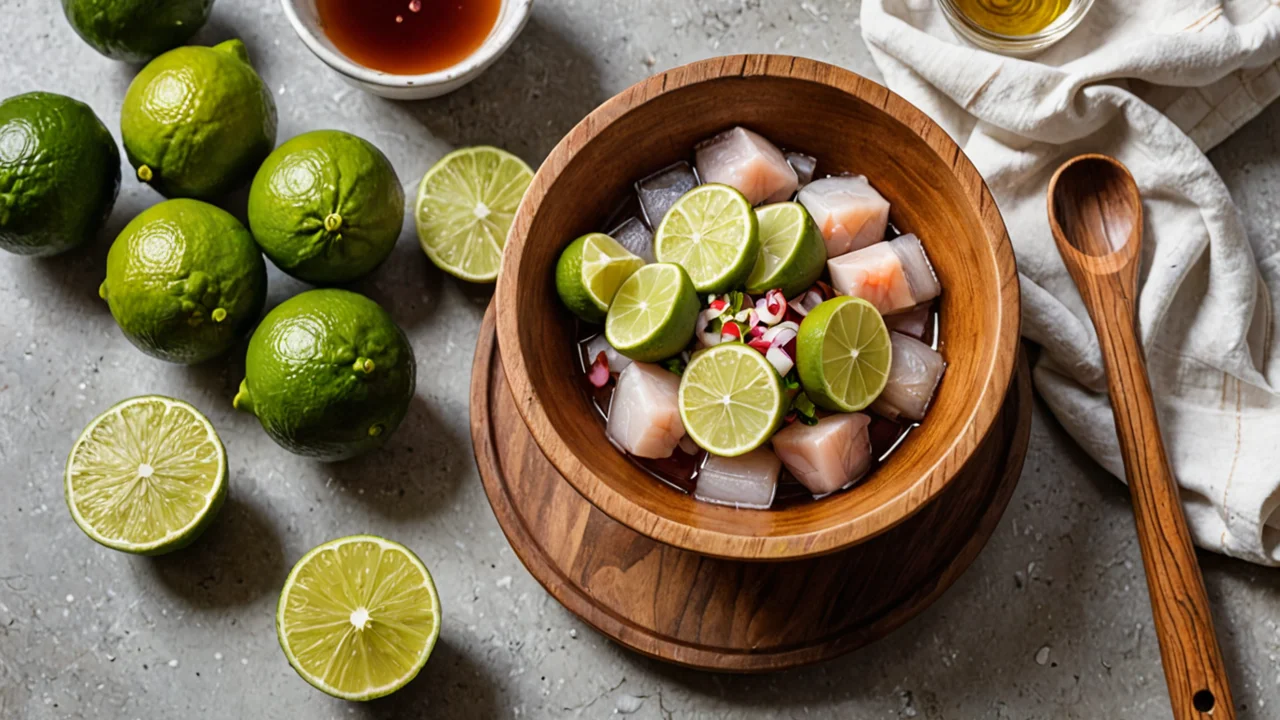
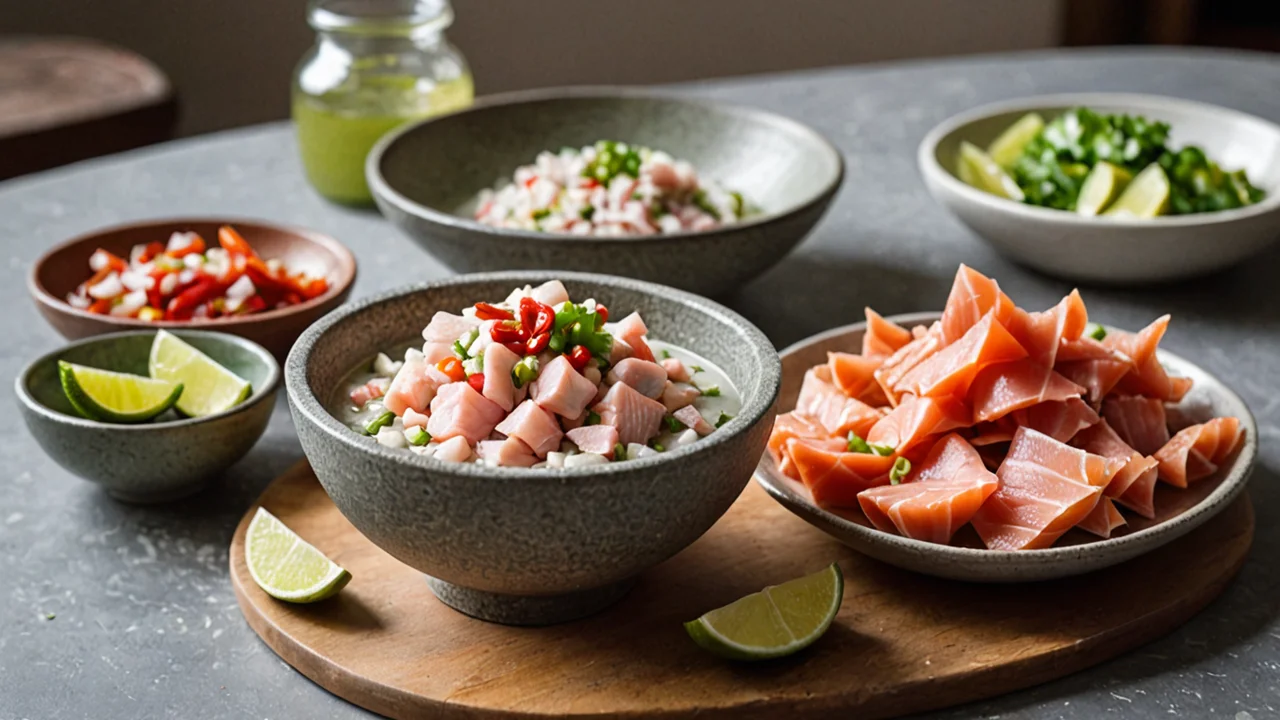
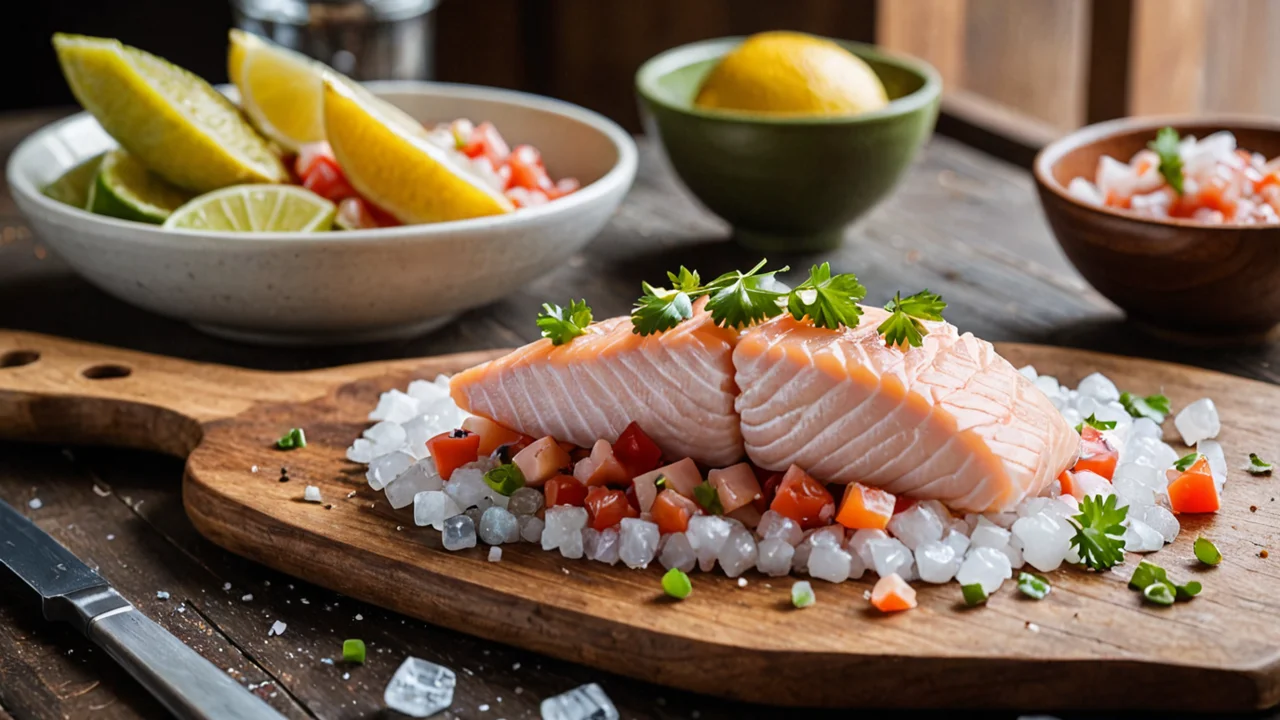
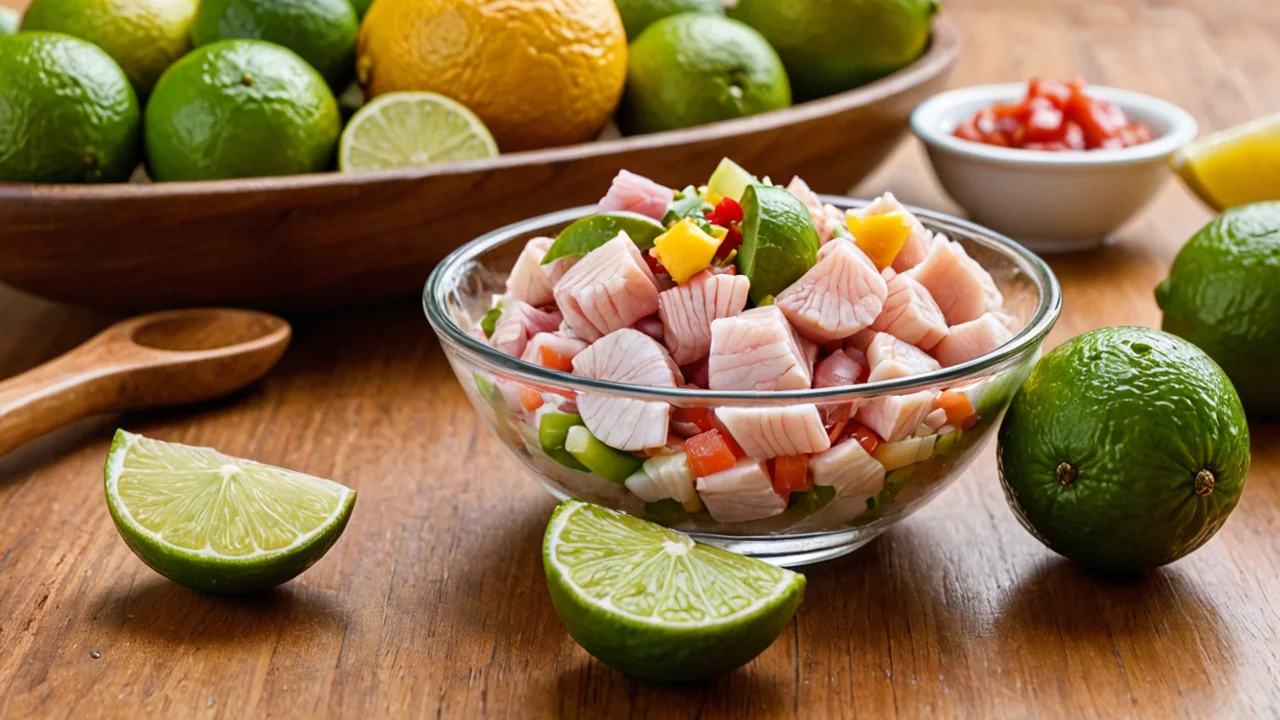
Ceviche's regional styles range from a bare cure of fish, lime, and salt to versions with tomato, chile, onion, and a broth built from the fish's own juices. The variable that matters more than any of them is the fish. Curing in citrus does not kill parasites; it changes the texture and flavor of the fish, and it is not a substitute for freezing if you are using fish that carries a parasite risk. Fish for ceviche should be frozen at -4 °F (-20 °C) or below for at least 7 days (168 hours), or at -31 °F (-35 °C) until solid and then held at -31 °F (-35 °C) for at least 15 hours, or frozen at -31 °F (-35 °C) until solid and then held at -4 °F (-20 °C) for at least 24 hours. A home freezer that does not reach these temperatures cannot do this reliably, and that is the honest limit of home ceviche from fresh-caught fish.
Past the safety floor, the regional decision is how far to take the cure. A short cure — minutes, not hours — keeps the fish translucent and firm and is the style where the fish is the point. A longer cure in more lime gives a more opaque, firmer result and a stronger acid bite, and it is the style where the leche de tigre, the seasoned citrus broth, is meant to be drunk alongside. The thing that goes wrong is curing too long in too much acid: the surface turns chalky and the fish tastes of nothing but lime. Cure in the refrigerator, drain before dressing, and add the aromatics — onion, chile, herbs — close to serving, because they soften and go flat in acid within a short window.
Fat, griddle, and heat source set the texture of everything flat
The same masa behaves differently depending on what it is cooked on and in. A comal — a flat, unrimmed griddle, traditionally clay or now often steel — gives tortillas their characteristic blistered, slightly charred surface, and the regional styles differ in how hot it runs and how long the tortilla stays on it. A tortilla that puffs is a sign of good masa and a hot, even surface; one that stays flat and leathery usually means the dough was too dry or the comal too cool. Clay comals hold heat more gently and give a softer, more even cook; steel heats faster and hotter and will scorch a thin tortilla if you walk away.
Fat is the other regional dial and the one home cooks most often flatten. Lard gives a specific richness and flake to tamale masa and to many traditional breads and beans; oil is a legitimate substitute but changes the texture, and butter changes it further. The trade-off is real: lard is harder to source well and goes rancid faster, oil is convenient and neutral, and a dough built for lard will feel stiffer and less pliable when made with oil. If you are substituting, expect to add a little more liquid and to lose some of the tenderness that makes the traditional version worth the trouble.
For arepas the heat source is the whole technique. They are cooked on a griddle or baked, and the two stages — a first pass to set the crust and a longer, gentler cook to bring the interior through — are not optional. Skipping the second stage gives you a cake that looks done and tastes raw at the center; the fix is lower heat and more time, not a hotter pan.
How to choose a tradition when you are cooking outside your own
Pick the tradition by the dish's function, not by the country label. If you are making something to eat with your hands at a table — tacos, arepas, tamales — the regional style that matters is the one built around the wrapper or the flatbread and its filling, because those are structurally linked. If you are making a sauce or a ceviche, the regional style that matters is the one built around the raw ingredient's handling, because that is where the technique lives. A recipe that mixes a banana-leaf tamale filling with a corn-husk steaming time, or a charred-chile salsa with a raw-fish cure, will fail in ways that look like your mistake rather than the recipe's.
Then decide how much authenticity you are buying. Fresh masa, lard, clay comals, banana leaves, and fish frozen to the temperatures above all cost more in money, sourcing, or freezer space than the convenient substitutes, and the substitutes are not frauds — they are different dishes. The honest way to choose is to ask which variable the dish actually depends on. For tamales it is the masa hydration and the filling temperature, and masa harina plus a thermometer gets you most of the way; the wrapper is a flavor choice you can make on availability. For ceviche it is the freezing, and there is no substitute that makes fresh, unfrozen risky fish safe. For tortillas it is the masa itself, and the gap between fresh and dried is wider than for almost anything else on this list.
What you should not do is average the traditions. A tamale that borrows the banana leaf, the corn-husk timing, and a salsa from a third region is not a fusion — it is a dish with no internal logic, and the failures will be unpredictable. Choose one tradition, follow its structure, and make your substitutions inside it, where you can predict what each one costs. That is the whole discipline of regional cooking: not memorizing which country owns which dish, but knowing which decisions in a dish are load-bearing and which are yours.